



Appl. Sci. 2026, 16(8), 3678; https://doi.org/10.3390/app16083678 (registering DOI) - 9 Apr 2026
Abstract
►
Show Figures
Calcium peroxide nanoparticles (CaO2 NPs) have recently attracted increasing attention as oxygen-generating nanomaterials with potential biomedical applications. Their ability to release molecular oxygen and reactive oxygen species (ROS) in aqueous environments enables modulation of hypoxic and oxidative microenvironments, which play critical roles
[...] Read more.
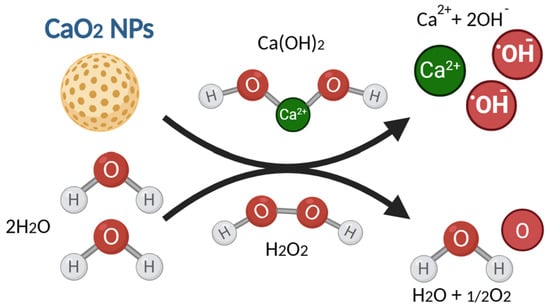
Calcium peroxide nanoparticles (CaO2 NPs) have recently attracted increasing attention as oxygen-generating nanomaterials with potential biomedical applications. Their ability to release molecular oxygen and reactive oxygen species (ROS) in aqueous environments enables modulation of hypoxic and oxidative microenvironments, which play critical roles in infection control, tumor progression, and tissue regeneration. Despite growing interest in oxygen-releasing biomaterials, the literature specifically addressing CaO2 nanomaterials remains comparatively limited and fragmented, particularly when compared with the extensive body of work on calcium oxide-based systems. This review provides a comprehensive overview of CaO2 nanoparticles, focusing on synthesis strategies, physicochemical properties, and emerging biomedical applications. Conventional bottom-up synthesis routes based on calcium salts, calcium hydroxide, and calcium oxide are critically compared, highlighting the influence of reaction parameters and stabilizing agents on particle size, morphology, crystallinity, and colloidal stability. Surface modification strategies, including polyethylene glycol, polyvinylpyrrolidone, and hyaluronic acid, are also discussed for their role in improving nanoparticle stability, regulating decomposition kinetics, and enhancing biocompatibility. The mechanisms governing oxygen and ROS generation are analysed in relation to antibacterial activity, hypoxia alleviation in tumor microenvironments, and oxygen-supplying biomaterials for tissue engineering and wound healing. In addition, key challenges associated with oxidative stress responses are discussed. Finally, the review outlines current limitations and perspectives regarding the clinical translation of CaO2-based nanotherapeutic systems. Overall, this work aims to consolidate the currently dispersed knowledge on CaO2 nanoparticles and provide a critical framework to guide future research in oxygen-releasing nanomedicine.
Full article
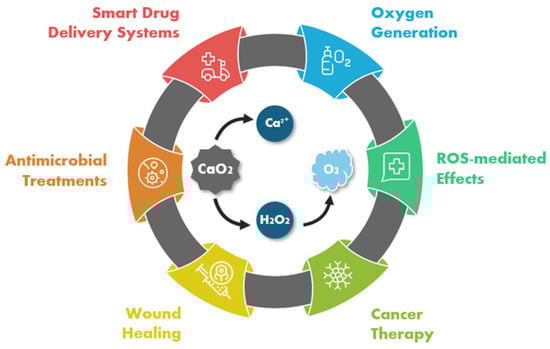
Figure 1